Shannon Pueschner, curator of exhibitions & Holly Van Eperen, collections and project manager
On our recent trip with Museum members and friends, “Tapestries of the Driftless,” we found ourselves following a thread that connected our destinations: the relationship between our surroundings and the art they inspire. Sometimes we encountered the inspiration first. Other times, we met the artwork before discovering where it began.
Our first stop, Frank Lloyd Wright’s Taliesin, introduced this theme beautifully. Located on an 800-acre estate in Spring Green, Wisconsin, Taliesin was Wright’s home, studio, and school. Its expansive windows invite the landscape into the spaces where Wright lived and worked, revealing how closely his architecture was connected to the natural world. Wright’s advice to his apprentices offered a fitting thought to carry throughout our travels: “Study nature, love nature, stay close to nature. It will never fail you.”
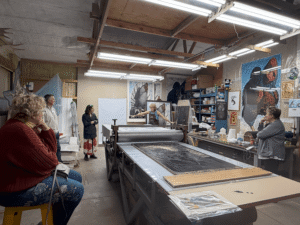
That connection became personal during our visit with longtime Birds in Art artist S.V. “Sue” Medaris at her home studio in Mount Horeb. Traveling from our home base in Madison, we passed rolling hills, farms, and livestock—a landscape reflected in the work Sue shared with us. Welcoming us into her world, while we watched Sue pull a print featuring her dog and muse, Omar, bringing the relationship between daily life and artistic inspiration into focus.
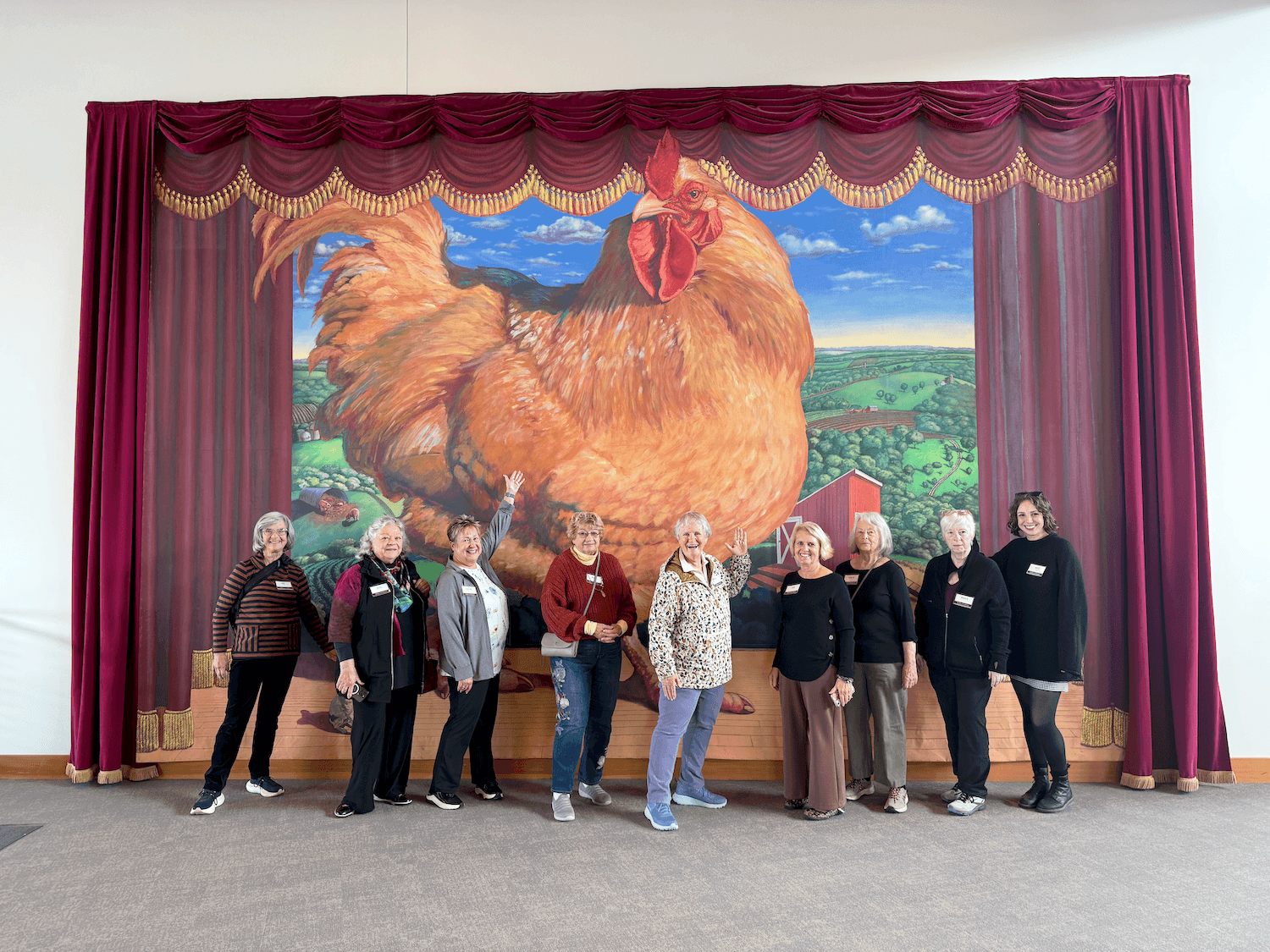
We had already encountered that relationship on a much larger scale earlier in the day. Before arriving at Sue’s studio, we stopped at Epic Systems’ headquarters in Verona to see her twenty-foot-wide painting, The Return of Big Tiny. While a medical software company might seem like an unexpected destination for a Museum trip, this enormous chicken provided a compelling reason to visit. Seeing Sue’s painting at Epic, then visiting the environment that informs her work, let us follow the thread from artwork back to inspiration.
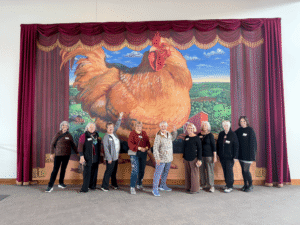
We noticed other connections as we traveled—visits to Stoughton, Verona, and around Madison offered still more opportunities to consider the paths artworks take from their beginnings to the places where we encounter them.
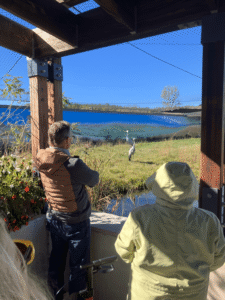
As we traveled home, the trip’s title felt especially fitting. Landscapes, animals, studios, galleries, and the people who welcomed us had become interwoven parts of our experience. Wright might have been onto something: staying close to nature gives us plenty to notice—and plenty to carry home.
Want to receive Woodson Wanderings directly to your email inbox? Sign up for our blog emailing list today!