

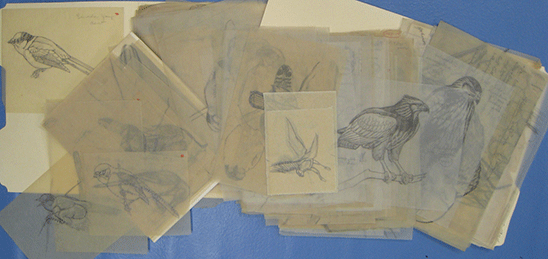
resource his “Fort Knox.” * These sketches and composition drawings – many including color and field notes – were completed over several decades. They depict birds from California to New York and Trinidad and Tobago to Greenland including living, endangered, and extinct species. The volume of work is so extensive it filled three drawers in a metal file cabinet tucked in a corner of Don’s studio. Each drawing is organized by species and housed in manila folders – not ideal Woodson Art Museum storage conditions, so there

is urgency to get them properly housed.
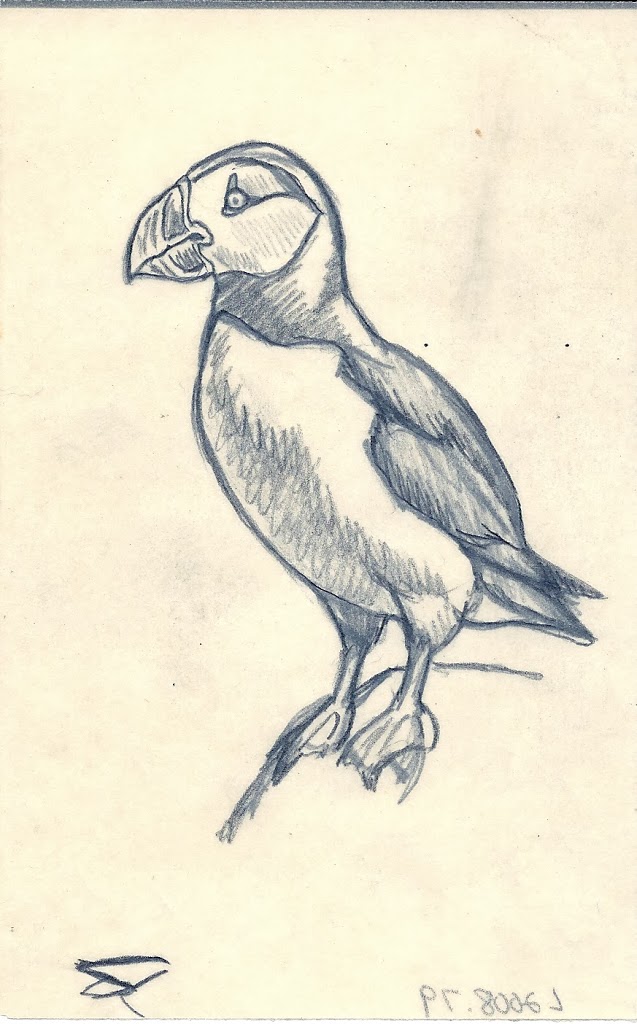 The sketches mostly are drawn on tracing paper, but some are on paper and illustration board. According to Don, “The point of working on paper rather than directly on the surface allows
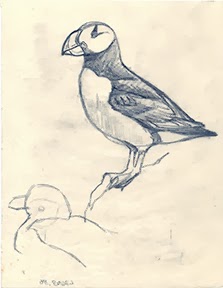 changes in composition before putting paint down. This is especially important when preparing illustrations for bird guides where many figures must be arranged on a single plate. Simply, I cut a sheet of tracing paper into workable sizes approximately 4” x 6”. It’s then easy to move the individual drawings about until I get the best possible
arrangement.”
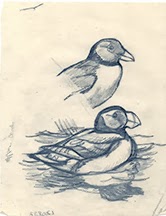 I am not a birder. So when I look at these works, I see pencil lines on paper. Some of the drawings include bird names, on occasion even the publication for which they were created. But many, many, others offer no clues to species. I have lovingly labored for hours searching field guides and online birding websites, but many times I am unsuccessful. Don’s years of birding experience made written identification unnecessary. Since I lack his expertise, ultimately, there are dozens of “unknown bird” entries.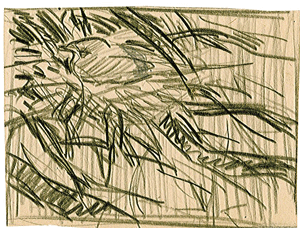
*The Woodson Art Museum holds a large collection of Don’s work, a 2009 bequest of his widow, Virginia.