

Rachel Hausmann-Schall, artist residency and adult program manager
My interest in visual art actually started with music. I have two older siblings who were very interested music, so as a child, I looked up to them. My brother started learning how to play guitar around age 10 (I would have been 4 at the time), and my sister had grown up playing piano. Some of my earliest childhood memories include being woken up early on a Saturday by the sound of electric guitar. As a teenager that marched to the beat of her own drum, my sister covered the walls of her room (and I truly mean floor to ceiling) in music posters and cut-out images of musicians. Being surrounded by music in my formative years, I grew up wanting to learn more about it.
In high school, I started learning about the 1960s and understood what a revolutionary time in history that was. Counterculture, rock ‘n’ roll, and artists like Jimi Hendrix, Janis Joplin, and Led Zeppelin were some of my favorites at the time. I remember asking my parents what it was like watching The Beatles play live on Ed Sullivan in 1964, or if they attended Woodstock. Although they didn’t attend the iconic outdoor festival, they did share stories about seeing Pink Floyd in concert at the height of their success. I kept asking them what it was like to grow up in the 60s and eventually I was even lucky enough to inherit some of their old albums, including bands like The Doors, Creedence Clearwater Revival, Carole King, Santana, Uriah Heep, and Cream.
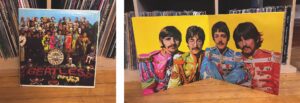
A couple of my favorite album covers from our collection, The Beatles, Sgt. Peppers Lonely Hearts Club Band. I love the large-scale image of the band on the inner cover of the album!
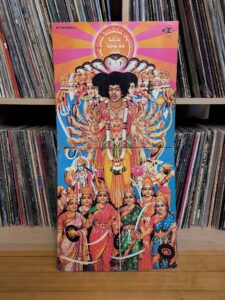
A couple of my favorite album covers from our collection, The Jimi Hendrix Experience, Axis: Bold As Love.
I was enamored by the album cover art, some with psychedelic and other-worldly illustrations. I remember thinking how creative and weird they were! I was hooked. When it came time for one of my first assignments in a high school-level design class, I knew I was going to somehow make music the focus. We were tasked with selecting an album cover, poster art, or an advertisement to present about. The goal of the presentation was that each student would be able to explain how their selected visual implemented various principles of design (i.e. contrast, balance, repetition, emphasis, etc.).
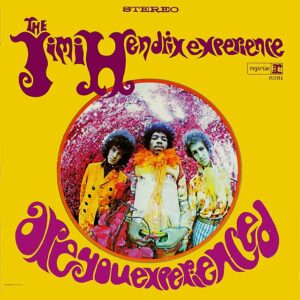
Album cover for the U.S. version of Are You Experienced by The Jimi Hendrix Experience. Reprise LP 6261. Image courtesy of Wikimedia Commons.
After becoming obsessed with 1960s art, music, and culture, I immediately knew which album cover I wanted to choose: Are You Experienced? by The Jimi Hendrix Experience. The striking purple and yellow color palette, bubble lettering, and distorted fishbowl image of the musical trio represented the era appropriately, as did many other album covers at the time. This cover also provided plenty of examples of the principles of design. Needless to say, I think I aced the assignment, paving the way for my interests in visual art to grow.
Fast forward to now, fellow educator Emily Wesenick and I are planning for educational programming and content to complement the Museum’s upcoming exhibition Tiffany or Ti-Phony: A Story of Desire. In addition to the iconic lamps featured in the exhibition, a section of Tiffany ephemera, ranging from books and advertisements to gift wrap and album covers will be included in the galleries. Through researching this section of the exhibition, I learned about a psychedelic rock band named after the renowned artisanal lamps: Tiffany Shade. Upon seeing their self-titled album cover, I was immediately reminded of the era I was infatuated with in high school. The color palette of saturated pinks, purples, and oranges reminded me one of the albums I inherited from my parents: Cream’s Disraeli Gears. While Tiffany Shade was only around for a couple of years, their sound certainly fit in with other psychedelic rock bands of the time. The iconic shape of a lamp shade surrounded by hand-painted floral motifs made for an album cover that perfectly marries the decade with the prominent, hand-crafted lamps that we have all come to know and love.
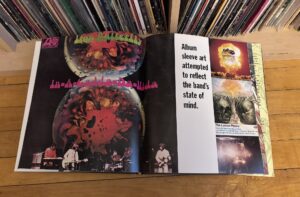
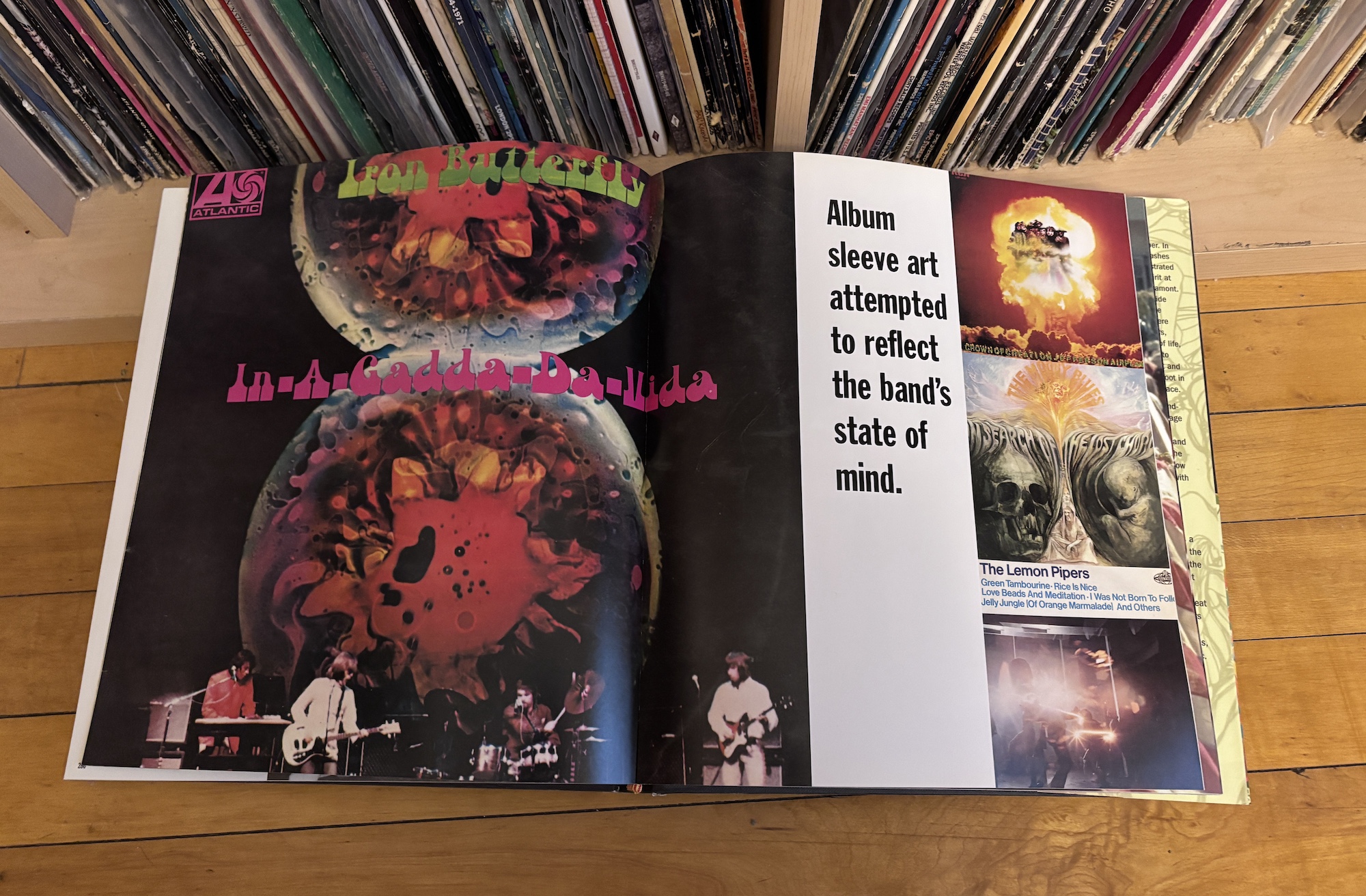
Spread from Hippie, a book about 1960s counterculture, discussing the importance of album cover art.
The artistry of Tiffany’s designs, their patterns, and colors have inspired innumerable parts of our culture, from fashion and interior design to soft drinks and cover art. Don’t miss your opportunity to experience Tiffany or Ti-Phony, which opens on Saturday, January 17, and learn how these iconic lamps inspired many fakes. You might even become a Ti-phony expert after studying the objects in the exhibition, spotting the differences between the real and fake Tiffany lamps. Maybe you want to visit with a set of headphones so you can listen to the Tiffany Shade while exploring the exhibition.